














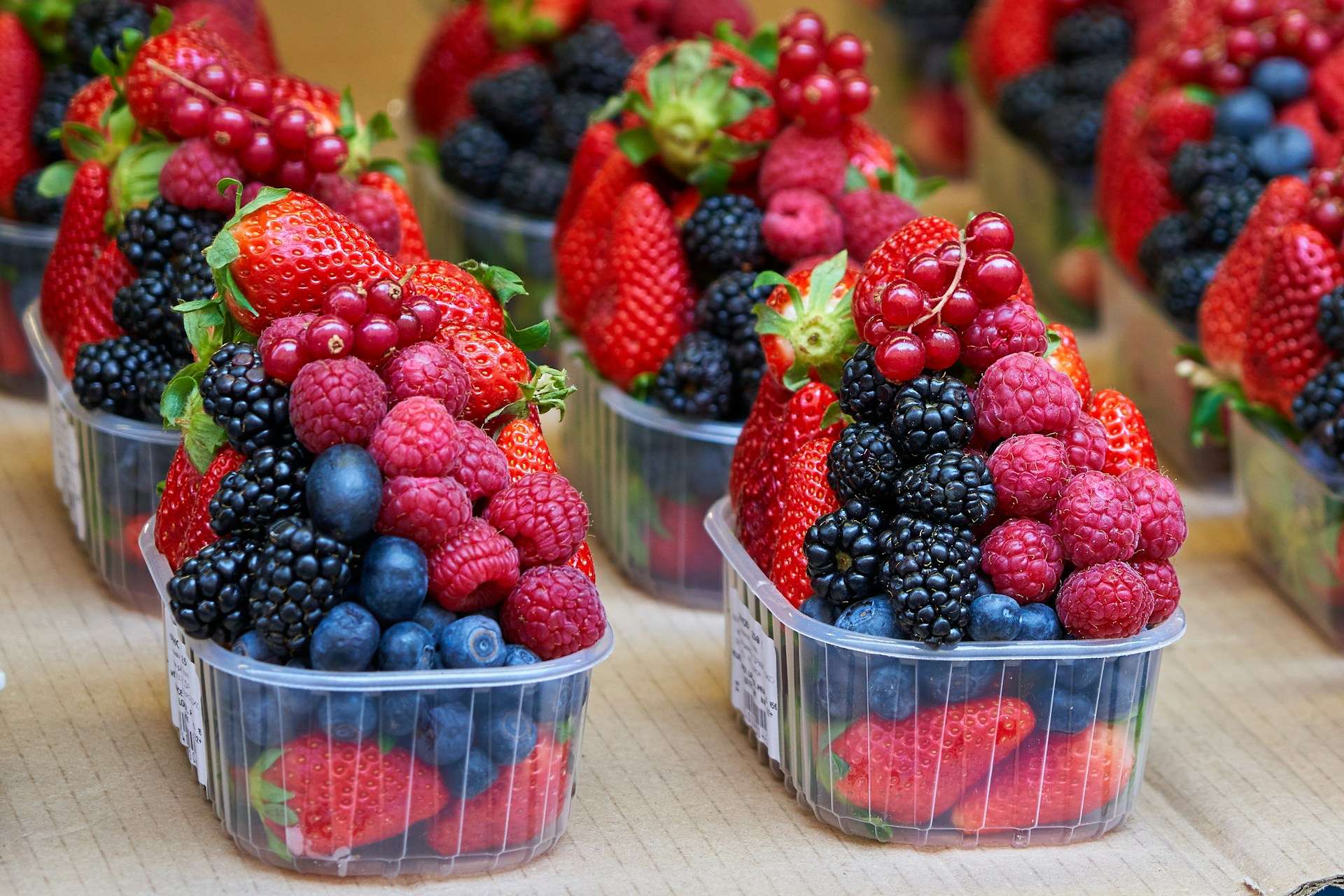
While all berries are juicy and tasty with various health benefits, some berries stand out as champs, boasting high doses of fiber, antioxidants, and vitamins.
Berries are like shields that protect cells from damage. They have four times the strength of additional fruits and ten times the power of veggies, thanks to their high content of antioxidants.
Continue reading for the ranking of the best berries, from everyday familiar mainstays like strawberries to more exotic goji berries. Prepare to navigate the bounty of berries and see how to add fruits to your diet.
Blueberries
Blueberries contain high amounts of anthocyanins and additional healthy plant compounds. Anthocyanins are naturally occurring plant pigments that give vegetables and fruits bright colors. These compounds protect cells, fight off harmful germs, and calm inflammation.
Studies show consuming blueberries frequently can offer several benefits, such as preventing type 2 diabetes, keeping your heart strong, and helping your brain stay sharp. Additionally, it can make it easier to maintain a healthy weight and protect your eyesight from an eye disease called macular degeneration.
Blueberries are rich in vitamin K, with a one-cup serving meeting 23% of the recommended intake or daily value (DV). Vitamin K is crucial for blood clotting and bone health. In addition, blueberries are high in manganese and deliver 22% of the DV in a one-cup serving. Manganese is a mineral involved in producing energy and protecting cells from damage. It’s also needed for blood clotting and immune, reproductive, and bone health.
Blueberries may be one of the most scrutinized berries, but that doesn’t mean others aren’t healthy. Berries are considered a team with roles to play in your health.
Blackberries
Blackberries boast high amounts of polyphenols — beneficial plant compounds — and anthocyanins.
Amongst berries, blackberries rank high in delivering fiber, a nutrient people lack. A one-cup serving delivers 7.63 grams of fiber — 27% of the DV. Fiber helps people feel fuller for longer, can help with weight management and control of blood sugar, and supports gut health.
Blackberries contain a high amount of manganese, 40% of the DV, vitamin K, 24% of the DV, and vitamin C, 34% of the DV. They are a good source of copper, 18% of the DV, a mineral supporting the immune system, and are needed to make connective tissues, energy, and blood vessels.
Raspberries
Raspberries’ antioxidant power is because of their high amounts of ellagitannins, another plant compound, and anthocyanin. Black raspberries are particularly rich in these health-boosting compounds. Research indicates that consuming foods rich in ellagitannins and anthocyanins may help reduce waist circumference, cholesterol, blood sugar, and blood pressure.
Raspberries supply high levels of vitamins, 36% of the DV, 35% of the DV of manganese, and eight grams of fiber, 29% of the DV in a one-cup serving. They are also a great source of copper, 12% of the DV.
Strawberries
One cup of strawberries provides 94% of the DV of vitamin C. Vitamin C has a role in supporting immune health and has antioxidant properties. It is also crucial for making collagen, a protein for healing wounds. Additionally, vitamin C helps the body absorb iron from plant-based foods.
Strawberries are a good source of folate and are high in manganese, 24% of the DV), meeting 87% of the DV contained in a one-cup serving. Folate is critical for producing DNA and additional genetic materials and is essential for a healthy pregnancy.
Research shows consuming strawberries regularly can offer many health benefits. They have been linked to improved blood pressure, cholesterol, and vascular health. Eating them can also help with resistance to insulin, a condition that shows the body isn’t responding normally to insulin, the hormone it produces to keep normal blood sugar levels.
Blackcurrants
Blackcurrants are jam-packed with nutrients and antioxidants despite being less popular than other berries. Just one cup of blackcurrants contains 203 milligrams of vitamin C — 226% of the recommended daily value — and more than the amount in strawberries.
This fruit has high levels of proanthocyanidins, which have many health benefits, including fighting germs, helping relax blood vessels, and reducing inflammation.
A cup of blackcurrants delivers 12% of the DV of manganese and 8% of potassium’s DV. Potassium supports many functions of the body, including the heart, kidney, muscle, and nerve health.
In addition, blackcurrants are an excellent source of iron, 10% of DV, and copper, 11% of DV. Iron is required for the production of certain hormones and red blood cells.
Goji berries
Goji berries, or wolfberries, are small scarlet berries used in traditional Chinese medicine for over 2,000 years. They have long been used as herbal medicine to support the liver and kidneys and improve vision. Goji berries are traditionally sold dried in the United States and can be found in grocery stores’ supplement section or dried fruit aisle.
Goji berries contain the most significant amount of zeaxanthin, a carotenoid—type natural pigment — found in yellow, orange, and red fruits and veggies. Zeaxanthin is also located in the eye and protects against the effects of oxidation and harmful light, reducing the risk of age-related macular degeneration.
Goji berry research is still in the early stages. However, studies show they could provide some benefits, including protecting against diabetes and glaucoma, an eye disease.
A five-tablespoon serving of dried goji berries offers 3.64 grams of fiber, 13% of the DV, vitamin C’s 15% of the DV, and a substantial dose of vitamin A, 250% of the DV. The high amount of vitamin A in goji berries is due to their carotenoid content. Vitamin A maintains the immune system, lungs, heart, eye health, and other organs.
Grapes
Grapes are a berry botanically. They contain substantial levels of resveratrol, a valuable compound in other plant foods like nuts, blueberries, and red wine.
The health benefits of grapes are believed to be attributable to resveratrol, which has been shown to have anti-inflammatory and antioxidant actions and strengthen the immune system. It even helps control heart disease, weight, and some cancers.
One cup of grapes provides 26% of manganese’s DV and 11% of vitamin K’s DV.
Cranberries
Raw cranberries are safe to eat, but their tartness can off-put many people. In America, cranberries are traditionally enjoyed as dried fruit, juice, or as a sauce to serve with turkey. Nevertheless, cranberries and cranberry products are among the most researched berries because of their rich content of polyphenols and their impact on health.
The antibacterial properties of cranberries have been proven to help treat urinary tract and bladder infections. Cranberry consumption is linked to a decreased risk of kidney and cardiovascular diseases and diabetes. In addition, other studies show cranberries can assist with managing rheumatoid arthritis, improving gut microbiota, and preventing dental diseases.
One cup of unsweetened cranberry juice provides 26% of the DV for vitamin C and 11% of the DV for vitamin K.
Acai berries
Acai berries come from a plant native to South and Central America, the acai palm. Numerous beneficial plant compounds are found throughout the plant’s pulp, seeds, fruit, leaf, and skin.
You will not be able to locate fresh acai berries in the U.S. because of their short shelf-life and the distance from their native habitat. Usually, you will find acai in frozen form, in a frozen fruit smoothie, in juice, or powder form.
Some small studies using humans and acai product consumption show positive effects on HDL “good” cholesterol, tinnitus — ringing in the ears, vascular function, and blood sugars.
The U.S. Department of Agriculture’s nutrition database mentions acai in several food products. A non-branded listing of acai berry drink shows an 8-ounce serving offers 3.19 grams of fiber, 11% of the DV, 124% of vitamin C’s DV, 143% of vitamin A’s DV, 37% of the DV for vitamin K, and 197% of vitamin E, along with other nutrients.
It’s critical to read the nutritional facts of all food products, including acai products, and note any additional sugars.
How can you include berries in your diet?
Remember, variety is the key to a healthy diet, so mix up these ideas to enjoy the deliciousness and health benefits of berries.
Here are some ways to include berries in your diet:
• Fold blueberries into waffle or pancake batter.
• Top your oatmeal, cereal, or yogurt with a handful of fresh blackberries.
• Toss raspberries into green salad alongside nuts and feta cheese for a nutritious and vibrant salad.
• Roast strawberries with black pepper and balsamic vinegar for a sweet, unique snack.
• Blend acai powder or blackcurrants with milk and other veggies or fruits for a nutrient-rich smoothie.
• Combine chopped red onion with dried cranberries, cilantro, lime juice, and jalapeños for a refreshing, vibrant salsa.
• Eat grapes with cheese and wholegrain crackers for a nutritious, balanced snack.
• Mix your favorite berries with cottage cheese.
• Mix goji berries into quinoa or rice for a nutritious side dish.
A quick summary
Whatever your preference is, from vibrant, tart raspberries to juicy and sweet blueberries, every berry packs a potent punch of nutrients waiting to be enjoyed.
Each time you add nutrient-rich foods, including berries, to your diet, it boosts your overall health and meets your nutritional needs. Grab a big handful and savor your good health!






